The Nine Planets (Grahas): Meaning and Influence in Vedic Astrology
The nine Grahas — Sun, Moon, Mars, Mercury, Jupiter, Venus, Saturn, Rahu, and Ketu — are the building blocks of every Vedic reading. Here is what each planet governs and what it actually feels like in a life.
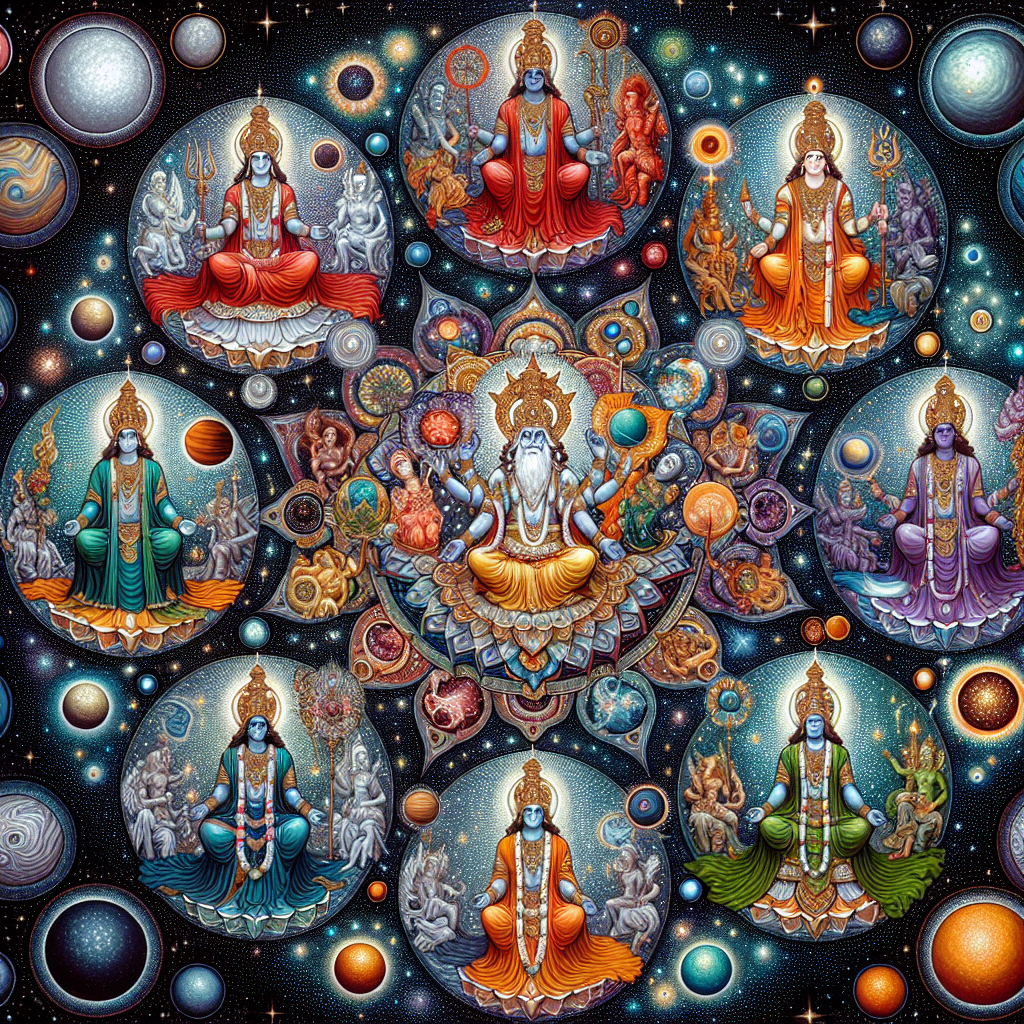
Every Vedic reading, no matter how complex, is ultimately a conversation between the nine Grahas. The word graha literally means "that which seizes" — a planet is something that grabs hold of a part of your life and colors it. Learning the personality of each Graha is the single highest-leverage investment you can make as a Vedic astrology student.
This guide walks through each of the nine, in the traditional order.
1. Surya (Sun) — the soul, the king
The Sun is the atma — the soul, the core self. It signifies father, authority, vitality, ego, and the public office you carry. A strong Sun makes a person charismatic, confident, and central in any room they enter. A weak Sun produces low self-worth, estranged relationships with authority, and health problems in the heart, eyes, and spine.
The Sun is exalted in Aries and debilitated in Libra. Its mantra is Om Suryaya Namah. Its day is Sunday, its gemstone is ruby, its color is red/orange.
2. Chandra (Moon) — the mind, the mother
The Moon is the manas — the mind, the emotional body. It signifies mother, home, nourishment, memory, and the felt texture of daily life. Vedic astrology elevates the Moon above the Sun in importance because mental state determines perceived quality of life more than any other factor.
The Moon is exalted in Taurus and debilitated in Scorpio. Waxing Moons are strong; dark Moons (within 72° of the Sun) are weak. Mantra: Om Chandraya Namah. Day: Monday. Gemstone: natural pearl. Color: cream/silver.
3. Mangal (Mars) — the warrior, the engineer
Mars is raw energy — courage, initiative, physical strength, sexual drive, property, siblings (especially brothers), and conflict. A strong Mars in the chart produces athletes, surgeons, engineers, soldiers, and entrepreneurs. A weak or afflicted Mars produces anger, accidents, surgeries, and conflict with siblings.
Mars is exalted in Capricorn and debilitated in Cancer. Its placement in the 1st, 4th, 7th, 8th, or 12th house produces Mangal Dosha, which traditionally complicates early marriage. Mantra: Om Mangalaya Namah. Day: Tuesday. Gemstone: red coral. Color: red.
4. Budha (Mercury) — the messenger, the merchant
Mercury rules intelligence, speech, commerce, skin, and nervous system. It is the natural signifier of students, writers, analysts, traders, and comedians. A strong Mercury gives sharp wit, persuasive speech, and deal-making ability. An afflicted Mercury produces stuttering, learning difficulties, and business losses.
Mercury is unique in that it takes the qualities of whichever planet it associates with — near the Sun it burns, near Jupiter it becomes wise, near Saturn it becomes calculating. Exalted in Virgo (its own sign), debilitated in Pisces. Mantra: Om Budhaya Namah. Day: Wednesday. Gemstone: emerald. Color: green.
5. Guru (Jupiter) — the teacher, the benefactor
Jupiter is the great benefic — the planet of wisdom, dharma, teachers, children, expansion, and spiritual protection. A strong Jupiter can redeem an otherwise difficult chart. It produces philosophers, judges, professors, priests, and people who draw good fortune effortlessly. Children are considered a Jupiter gift; a weak Jupiter can delay or complicate conception.
Jupiter is exalted in Cancer and debilitated in Capricorn. It is so important that many traditions prescribe gold or yellow sapphire for almost anyone seeking to strengthen life generally. Mantra: Om Gurave Namah. Day: Thursday. Gemstone: yellow sapphire. Color: yellow.
6. Shukra (Venus) — the artist, the lover
Venus governs love, art, luxury, marriage (especially for men — it signifies the wife), vehicles, and refinement. A strong Venus produces designers, musicians, poets, and people surrounded by beauty. An afflicted Venus produces relationship chaos, financial leakage on luxury, and reproductive health issues.
Venus is exalted in Pisces and debilitated in Virgo. In a man's chart, Venus also signifies the wife; in a woman's chart, Jupiter signifies the husband. Mantra: Om Shukraya Namah. Day: Friday. Gemstone: diamond. Color: white.
7. Shani (Saturn) — the taskmaster, the elder
Saturn is the great teacher of karma. It governs time, longevity, discipline, service, delay, and old age. Saturn is slow — it takes 29.5 years to orbit the zodiac — and it rewards persistence while punishing shortcuts. Its transits (especially Sade Sati, the 7.5 years when Saturn transits your Moon sign and the two adjacent signs) are life's great maturation periods.
Saturn is exalted in Libra and debilitated in Aries. It produces monks, civil servants, farmers, laborers, researchers, and anyone whose authority comes from long suffering rather than quick success. Mantra: Om Shanaye Namah. Day: Saturday. Gemstone: blue sapphire (handle carefully — it is the most powerful of all). Color: deep blue/black.
8. Rahu — the north lunar node, the ambitious shadow
Rahu is not a physical body — it is a mathematical point where the Moon's orbit crosses the ecliptic going north. But in Vedic tradition, Rahu has full planetary status because of its profound effect on human karma.
Rahu governs obsession, foreign lands, technology, fame, deceit, and outsider ambition. It is the planet of people who break into systems they were not born into — immigrants who succeed abroad, caste-outsiders who rise through the tech economy, celebrities who rocket from nowhere and then crash. A well-placed Rahu produces dramatic success; a poorly-placed one produces obsessive pursuit of empty goals.
Rahu has no classical exaltation (though many texts assign it Gemini). Its mantra is Om Rahave Namah. Gemstone: hessonite garnet. Color: smoky grey/violet.
9. Ketu — the south lunar node, the liberator
Ketu is Rahu's opposite point. It governs detachment, moksha (liberation), past-life mastery, occult knowledge, and sudden loss (often of things one no longer needs). Where Rahu reaches outward with insatiable desire, Ketu cuts away, turns inward, and liberates.
A well-placed Ketu produces mystics, spiritual teachers, surgeons, and people with uncanny intuition. A poorly-placed Ketu produces headaches, isolation, and a sense of mysterious lack. Ketu is exalted in Sagittarius in many schools. Mantra: Om Ketave Namah. Gemstone: cat's eye. Color: ash/multicolor.
The nine together
Notice how the nine Grahas cover every domain of life: soul, mind, body, intellect, wisdom, love, discipline, ambition, and liberation. A Vedic reading is essentially a map of how these nine characters are positioned on the stage of your twelve houses and how they interact.
Friendship and enmity
Each Graha has friends, enemies, and neutral relationships with the others. For example: Sun and Jupiter are friends; Sun and Saturn are enemies (father-son mythological tension); Moon and Mercury are enemies because Mercury distracts the Moon. These relationships matter when assessing house-lord placements — a planet sitting in the sign of its friend performs far better than one sitting in the sign of its enemy.
How to strengthen a planet
Classical remedies (upaya) for each planet follow a consistent pattern:
- Chant the planet's mantra a prescribed number of times (e.g., 108 or 1008 daily).
- Wear the appropriate gemstone, properly prescribed and energized.
- Fast on the planet's day (Tuesday for Mars, Thursday for Jupiter, etc.).
- Donate the planet's charitable items — jaggery for the Sun, white food for the Moon, red cloth for Mars, green vegetables for Mercury, yellow items for Jupiter, and so on.
- Perform puja or service associated with the planet's deity.
The Grahas are the characters. The houses are the stage. The Dasha is the chapter you are reading. Master the characters first and the rest of Vedic astrology unfolds naturally.