How to Read Your Vedic Birth Chart: A Step-by-Step Guide
Your Vedic birth chart (kundli) is a map of the sky at your moment of birth. This guide walks you through reading it layer by layer — from your rising sign to planetary strengths, houses, and current life period.
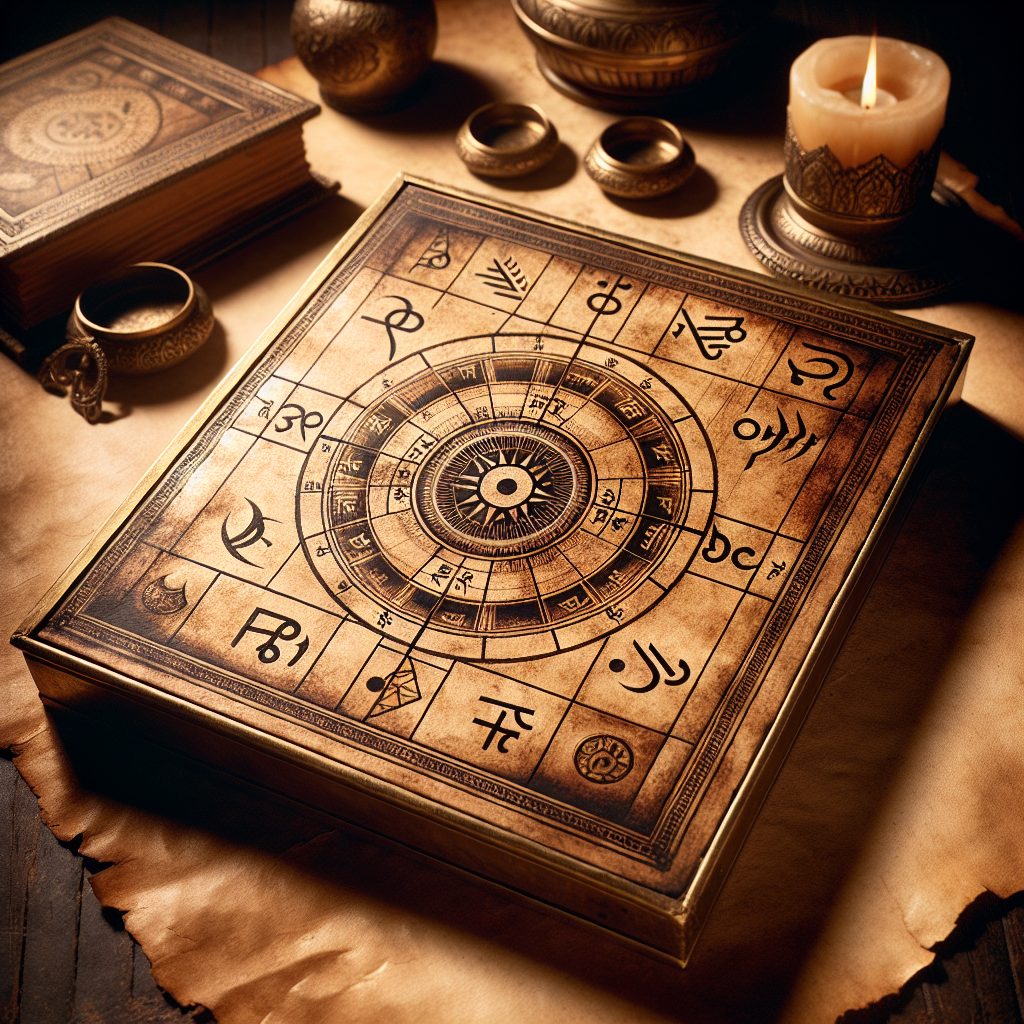
A Vedic birth chart — called kundli, janam patri, or simply your horoscope — is one of the densest documents you will ever own. It holds the exact arrangement of the nine planets across twelve houses at the moment you drew your first breath. With some orientation, you can learn to read it yourself, at least at a foundational level.
This guide walks you through the chart in the order a trained Jyotishi actually reads it. Do each step once slowly, then come back and re-read the whole thing.
Step 1: Identify the Lagna (rising sign)
The single most important point on your chart is the Lagna, also called the ascendant. It is the zodiac sign that was rising on the eastern horizon at your birth. Because the Earth rotates once every 24 hours, the Lagna changes roughly every two hours — meaning birth time accuracy matters. An error of 20 minutes can push your Lagna into the next sign entirely, reshuffling every house.
In a North Indian-style chart, the Lagna sits in the top-center diamond and the other houses are counted counter-clockwise from it. In a South Indian-style chart, the Lagna can be in any box (the signs are fixed; the Lagna is marked) and the houses are counted clockwise. Both conventions are equivalent; pick whichever your software displays and stick with it.
The Lagna defines the body, the outward personality, the physical vehicle, and how you first meet the world. An Aries Lagna enters rooms sharply; a Taurus Lagna enters slowly; a Gemini Lagna enters talking; a Leo Lagna enters on a stage of its own making.
Step 2: Find the Moon sign (Rashi)
Locate the Moon in your chart. The sign it occupies is your Rashi — your Moon sign. This is the single most important signifier of mind, mood, memory, emotional intelligence, and mother. When Indians say "my sign is Leo," they almost always mean their Moon sign, not their Sun sign.
Notice which house the Moon sits in, counting from your Lagna. Moon in the first house brings strong imaginative mind and visibility; in the fourth, deep love of home and mother; in the seventh, popularity and emotional partnership focus; in the tenth, public career that rises and falls with your moods.
Step 3: Locate the Sun
Find the Sun. Its sign indicates your core identity and self-worth; its house indicates the area of life where you seek recognition and where your authority naturally shines. Sun in the fifth house loves teaching and creative command; Sun in the ninth gives natural wisdom and travel; Sun in the sixth grants victory over enemies and strong health discipline.
Step 4: Read the lords of each house
Each of the twelve signs has a ruling planet (its lord). For each house in your chart, identify the sign occupying it and therefore its house lord. Then locate that lord elsewhere in the chart.
This is the master technique of Vedic reading. Example: if your seventh house (marriage) is Libra, its lord is Venus. If Venus then sits in your tenth house of career, your marriage will be entangled with your career — perhaps you will meet your partner through work, marry a professional, or marry near a major career peak. The house lord carries the matters of its house to wherever it sits.
Do this for all twelve house lords and you already have a rich narrative of your life.
Step 5: Assess planetary strength (Shadbala)
A planet's influence depends on its strength. Four quick checks:
- Exaltation and debilitation — every planet has a sign where it is strongest (exalted) and one where it is weakest (debilitated). Jupiter exalted in Cancer is a different animal from Jupiter debilitated in Capricorn.
- Own sign — a planet in a sign it rules (Moon in Cancer, Sun in Leo, Venus in Taurus or Libra) is strong and comfortable.
- Combustion — a planet too close to the Sun is "burned" and loses its independent voice, though it may strengthen the Sun itself.
- Retrograde — classical texts consider retrograde planets stronger, though their effect is more internalized and slower to manifest externally.
Step 6: Look at the Navamsa chart (D9)
Every Vedic reading uses at least two charts: the main chart (Rashi or D1) and the Navamsa chart (D9). The Navamsa is a refinement — each sign is divided into nine parts, and those divisions are plotted on their own wheel. The Navamsa reveals the real strength of each planet and is especially important for marriage and the second half of life. A planet that looks strong in the D1 but weak in the D9 often delivers less than expected; the reverse is also true.
Always glance at your Navamsa before making confident statements about career peaks or partnership quality.
Step 7: Identify key yogas (planetary combinations)
A yoga is a special planetary configuration that produces a distinct life outcome. Classical texts describe hundreds. A few common ones:
- Raj Yoga — lords of trikona houses (1, 5, 9) combined with lords of kendra houses (1, 4, 7, 10) produces status, influence, and authority.
- Dhana Yoga — links between the second and eleventh house lords produces material wealth.
- Gaja Kesari Yoga — Jupiter and Moon in mutual angles produces charisma, dignity, and popularity.
- Panch Mahapurusha Yoga — any of the five non-luminary planets (Mars, Mercury, Jupiter, Venus, Saturn) in its own sign or exaltation in a kendra house produces greatness in the domain of that planet.
Step 8: Check your current Dasha period
Identify which Vimshottari Dasha you are in right now — the major planetary period that colors the current chapter of your life. Then check the sub-period (antardasha). A Jupiter main Dasha brings long-form wisdom, teaching, children, and expansion. A Saturn Dasha rewards persistence but punishes shortcuts. A Venus sub-period inside a Saturn main gives a few bright years of beauty, love, and art inside an otherwise disciplined decade.
Most chart software shows your Dasha ladder automatically. Pay attention: your chart does not change, but your Dasha does — it is the timing engine.
Step 9: Note difficult placements without panic
Every chart has weak spots. Saturn transiting your Moon (the famous Sade Sati) is a 7.5-year period of maturation. Mars in the seventh (Manglik) is said to complicate early marriage. Rahu in the first can bring unconventional identity and boundary confusion. These are real effects — but they are chapters, not sentences. The point of knowing them is to plan around them: marry a few years later, choose the partner who suits a Manglik chart, schedule a difficult surgery outside a punishing transit.
Step 10: Put it all together
Good chart reading is narrative. You are not stacking adjectives — you are telling a story: This person has a Cancer Lagna with an exalted Jupiter in the ninth house, a combust Mercury, and a current Venus-Jupiter Dasha. They are natively compassionate, have a strong father and teacher in their past, take a while to settle a career voice, and are in one of the most favorable three-year windows of their adult life for marriage, children, or the launch of a values-driven business.
Start small. Read just your Lagna, Moon, and current Dasha. Then add the house lords. Then Navamsa. Give yourself months, not minutes. A Vedic chart rewards patience in exactly the way the tradition itself rewards patience.